
Who Drives Tech Innovation and Who Gets Left Behind?
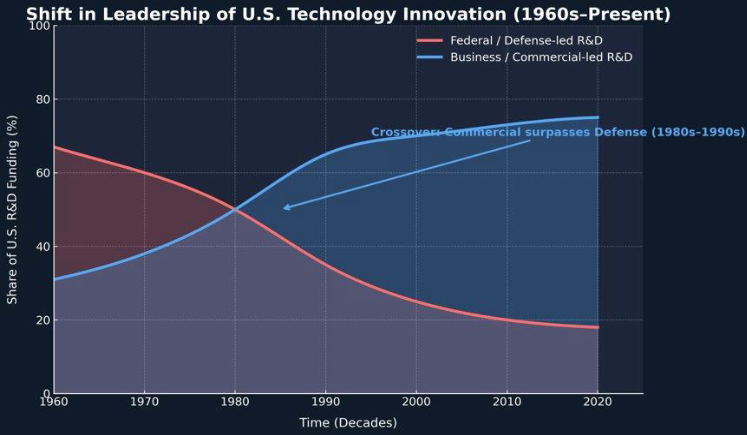
From the 1950s through the 1970s, the U.S. federal government led the charge in technology innovation, driven largely by defense-funded R&D.
But by the 1980s, that dynamic shifted — private industry overtook the government in R&D spending, fueling breakthroughs in personal computing, communications, and consumer technology. That trend has continued ever since — and shows no signs of reversing.
Why does this matter when we talk about obsolete chips?
Because it highlights a fundamental gap: the broader tech industry no longer serves government and defense needs.
Today, only about 1% of all chips produced end up in government or defense applications. Meanwhile, these sectors operate on decade-long lifecycles and require trusted, secure, and long-term components — not the short refresh cycles the commercial market demands.
Add in the stakes of national security, and we’re looking at a perfect storm:
1. A critical dependency on aging technology
2. A supply chain not designed for long-cycle reliability
3. And a widening gap between innovation and mission-critical needs
At Phoenix, we’re closing that gap.
We’re building a trusted, domestic source of semiconductor components that empowers government and commercial partners to sustain, secure, and modernize the technologies that keep our nation running.
Because innovation shouldn’t leave national security behind.